Case Overview
A glass-to-metal sealing manufacturer supplying vacuum relays and pressure sensors encountered a recurring problem during helium leak testing of a new product: some seals made with the same batch of 4J29 leads passed leak tests, while others developed microleaks after thermal cycling. The team checked the process parameters; the temperature profile, hydrogen flow and fixtures were unchanged. Only after returning the remaining material to the supplier for chemistry and thermal expansion retesting did the cause emerge: after a batch change, the new material’s expansion curve had shifted outside the matching window of the sealing glass.
Such manufacturers need more than a certificate bearing the nominal grade “Kovar.” They need batch-tested 4J29 traceable to its heat number, together with practical recommendations for pretreatment before sealing. DZX supplies batch chemistry and measured linear expansion reports, along with wet-hydrogen annealing windows, surface acceptance criteria and trial-sealing recommendations, helping customers keep post-sealing leak-test results within acceptance limits.
This case summarizes the application requirements, materials supplied by DZX and delivery value. For case-specific technical data, please contact our engineering team.
| Client Profile | Manufacturer of glass-to-metal seals for vacuum devices (relay and sensor housings) |
|---|---|
| Application | Hermetic metal-to-glass seals: leads, housings, sealing posts and baseplates |
| Materials Supplied | 4J29 Kovar alloy (29НК type) |
| Supply Forms | Strip, wire, bar and plate |
| Key Requirements | Batch thermal expansion matched to the sealing glass; stable chemistry (C/S/P control); consistent annealed surface condition |
| Delivery Arrangement | Standard sizes stocked; custom sizes confirmed against the production schedule, with material certificates supplied |
| Project Region | East China |
Our Solution
The sealing manufacturer’s bottleneck was not the grade itself, but three requirements that had not previously been met together in the same batch:
- Measured thermal expansion for each batch: the sealing match depends on mean linear expansion over 20-100℃ and 20-300℃. After a batch change, measured values from the same heat must be available. Relying on the nominal grade alone can result in correct material identification but leaking seals.
- Controlled chemistry and impurities: elevated C, S and P can leave bubbles and poor wetting at the sealing interface. These elements need control during melting and annealing, supported by batch reports.
- Consistent annealed surface condition: the wet-hydrogen atmosphere and dew point determine whether glass spreads and wets the surface. Surface condition must be agreed at handover, rather than guessed retrospectively after trial sealing.

DZX fixes three supply parameters: grade + specification + condition:
Each batch includes a chemistry report and measured linear expansion values, separately stated for 20-100℃ / 20-300℃ / 20-500℃ and linked to the heat number. Wet-hydrogen annealing temperature and dew-point windows are recommended according to the customer’s sealing-glass softening temperature. Incoming surface acceptance and retesting criteria are agreed, with trial sealing performed before bulk production.
| Stage | Specific Measures |
|---|---|
| Batch testing | Chemistry report + measured linear expansion (three temperature ranges), traceable to the batch heat number |
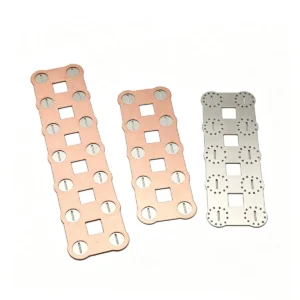
| Matching product form to the component | Wire for leads and sealing posts; strip/plate for housings and baseplates; bar for cylindrical components; cutting and slitting to drawing available |
| Process support | Recommended wet-hydrogen annealing temperature and dew-point windows; surface acceptance criteria |
| Batch management | Specify grade + specification + condition in the contract; review reports before batch changes and perform small-sample trial sealing when needed |
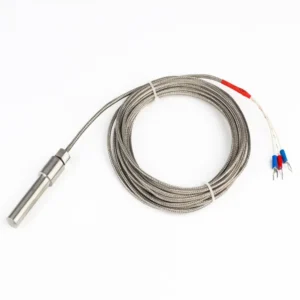
Sealing leads and posts

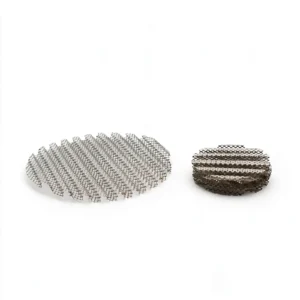
Housings, baseplates and stampings
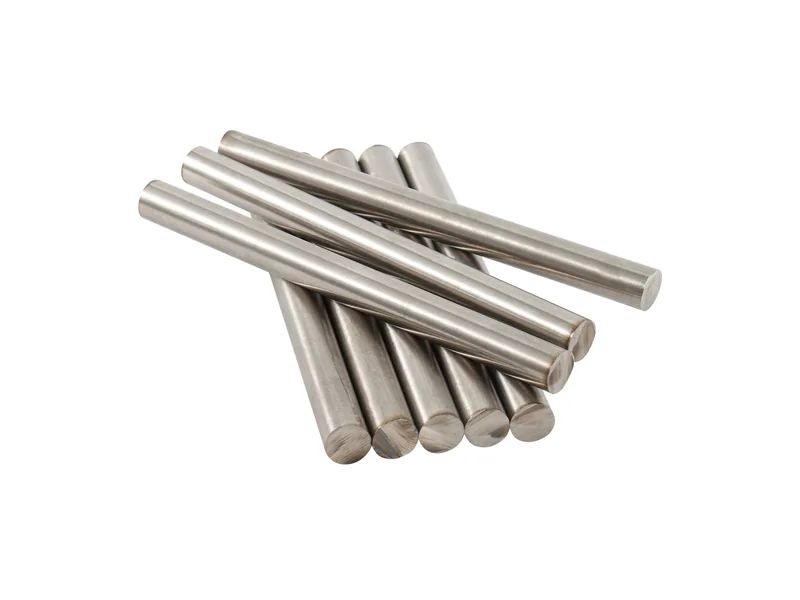
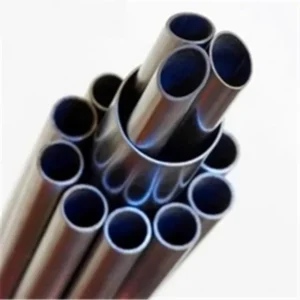
Machined sealing components and electrodes
Technical Specifications
Chemical composition (mass fraction, %):
| Element | 4J29 (29НК) |
|---|---|
| Nickel (Ni) | 28.5-29.5 |
| Cobalt (Co) | 16.8-17.8 |
| Manganese (Mn) | ≤0.50 |
| Silicon (Si) | ≤0.30 |
| Carbon (C) | ≤0.03 |
| Sulfur (S) | ≤0.02 |
| Phosphorus (P) | ≤0.02 |
| Iron (Fe) | Balance |
Mean linear expansion coefficient (a key parameter for matching seals to hard glass and ceramics):
| Temperature Range | Mean Value |
|---|---|
| 20-100℃ | 4.6 × 10⁻⁶/℃ |
| 20-300℃ | 5.5 × 10⁻⁶/℃ |
| 20-500℃ | 6.2 × 10⁻⁶/℃ |
Common supply specifications:
| Form | Size Range |
|---|---|
| Strip | Thickness 0.02-1mm × width 3-500mm |
| Wire | φ0.03-6mm |
| Bar | φ3-100mm |
| Plate | Thickness 0.1-20mm |
| Delivery Condition | Bright cold-rolled / annealed; cutting and slitting to size available |
Delivery and Quality Support
- Supplied documentation: material certificate (chemistry + dimensional report) and heat traceability; measured linear expansion report added when required.
- First articles and trial sealing: small-sample trial sealing is recommended to confirm the matching window before bulk sealing. Trial material can be arranged in minimum batches.
- Quality traceability: if abnormal leak-test results occur, chemistry and expansion data are traced by batch number to help determine whether the cause lies in the material, annealing or sealing process.
- Engineering contact: questions about sealing windows, leak-test methods and surface treatment can be discussed directly with the engineering team without multiple intermediaries.
Customer Feedback
Following trial sealing and the first production batch, feedback focused on the following:
- Batch data supplied with the material: chemistry reports and measured expansion values for all three temperature ranges arrive together, avoiding the need to infer batch properties from trial seals.
- Practical annealing windows: wet-hydrogen annealing temperature and dew-point recommendations matched to the glass softening temperature can be applied directly to the customer’s furnace settings.
- Clear surface acceptance: the annealed surface description is included in the handover checklist, establishing whether oxidation colors are acceptable or require retesting at delivery.
- Trial sealing before batch changes: small trial batches allow matching to be verified before bulk material enters production.
- Heat-number traceability: chemistry and expansion records can be traced by batch number after abnormal leak tests, making it easier to distinguish material, annealing and sealing issues.
- Sizes that support product development: strip, wire, bar and plate are available for small-batch trials, with cutting and slitting to drawings.
Our Capabilities
Jiangsu DZX Technology Co., Ltd., based in Changzhou, operates a self-owned factory of 12000+ square meters with melting, rolling, wire drawing and finishing lines. Its core team has specialized in precision alloys since 2002 and has served 1500+ business customers. Products undergo incoming, in-process and final inspection under the ISO9001 system. Bring drawings or operating parameters to discuss expansion-alloy delivery condition, tolerances and sealing-anneal recommendations directly with our team.
Related Products
4J29 Kovar Alloy
Chemistry, linear expansion and size specifications for strip / wire / bar / plate
Precision Expansion Alloys (Controlled-Expansion Alloys)
4J36 Invar / 4J29 Kovar comparison and low-expansion material selection
Electronics Applications
Precision alloys for component packaging, leads, sensors and magnetic shielding
Precision Instrument Applications
Soft magnetic, expansion and thermocouple alloy solutions for instrumentation
Further reading: Invar and Kovar Low-Expansion Alloy Selection Guide →
Frequently Asked Questions
How should 4J29 and 4J36 be used differently?
Why is wet-hydrogen annealing emphasized before sealing?
Does surface oxidation color always mean rejection?
Can expansion be measured and reported for each batch?
How are minimum order quantities, sampling lead times and acceptance arranged?
More Successful Cases
Structural Materials for Precision Instruments
Invar36 strip and plate with measured CTE for optical platforms
Precision Resistor and Magnetic Core Materials
TCR-controlled strip and soft magnetic 1J79 for electronic components
Temperature Measurement Materials for Power Plants
Matched thermocouples and compensation wire; acceptance by sheathed construction and tolerance class
Boiler Superheater Replacement
On-time delivery of TP304H / TP347H and Incoloy 800H tubes
References
- GB/T 15018-1994: Designations of Precision Alloys Defines designations and naming methods for precision alloys, including expansion alloys such as 4J36 and 4J29; the national standard governing grade designations. View Source
- GB/T 14985-2007: General Requirements for Dimensions, Shape, Surface Quality, Test Methods and Inspection Rules of Expansion Alloys Defines dimensions, shape, surface quality, test methods and inspection rules for expansion-alloy products, providing a direct basis for incoming acceptance. View Source
- ASTM F15-04(2022)“Standard Specification for Iron-Nickel-Cobalt Sealing Alloy” Covers UNS K94610 (approximately 29%Ni-17%Co-53%Fe, i.e. 4J29/Kovar) wire, bar, strip, plate and tube for glass sealing. Note: this standard was withdrawn in 2024 without replacement. View Source
- ASTM F1684-06(2021)“Standard Specification for Iron-Nickel and Iron-Nickel-Cobalt Alloys for Low Thermal Expansion Applications” Covers Fe-Ni and Fe-Ni-Co alloys for low thermal expansion, specifying chemistry, grain size and thermal expansion requirements. Note: withdrawn in 2024 without replacement. View Source
- ASM Handbook, Vol. 2: Properties and Selection: Nonferrous Alloys and Special-Purpose Materials An authoritative handbook containing chemistry, physical properties and thermal expansion data for low-expansion and sealing alloys, including Kovar and Invar. View Source