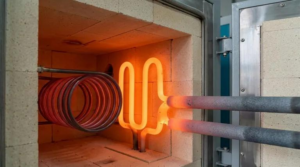
When specifying a heating element for an industrial furnace, heat-treatment line or electric heating system, the choice of resistance alloy affects more than the initial material cost. Operating temperature, furnace atmosphere, element geometry, electrical loading and maintenance requirements all influence material selection.
Two commonly considered material families are iron-chromium-aluminum (FeCrAl) alloys and nickel-chromium (NiCr) alloys. Both are used in resistance heating applications, but they are not interchangeable in every operating environment.
For engineers and purchasing teams, the better starting point is to define the actual service conditions before comparing individual grades.
What Is FeCrAl Heating Wire?
FeCrAl is a family of iron-chromium-aluminum resistance alloys used in industrial heating elements. Depending on the grade and operating conditions, these materials can form a protective aluminum-rich oxide layer during high-temperature service.
This oxidation behavior is one reason FeCrAl alloys are considered for applications such as industrial furnaces, heat-treatment equipment and other high-temperature heating systems.
However, performance depends on the exact alloy grade, element design, atmosphere, temperature cycling and installation conditions. A material designation alone is not enough to establish a suitable operating limit.
When sourcing FeCrAl heating wire, buyers should confirm the grade, wire diameter or strip dimensions, electrical resistance requirements, delivery condition and applicable technical documentation.
What Is NiCr Heating Wire?
Nickel-chromium (NiCr) resistance alloys are another established material family for electrical heating elements. Their properties vary by composition and grade, so the name NiCr should not be treated as a single universal specification.
NiCr alloys are used in a range of industrial and commercial heating applications. Depending on the selected grade and element design, they may be suitable for furnaces, heating assemblies, laboratory equipment and other resistance-heating systems.
Material selection should consider the required resistance, operating atmosphere, mechanical loading, temperature changes and the intended service life. Actual performance should be assessed using the supplier’s grade-specific technical data rather than a general description of the alloy family.
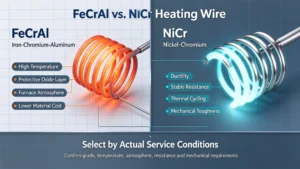
FeCrAl vs. NiCr: Key Selection Factors
1. Operating Temperature
Start with the required operating temperature of the heating element, not just the temperature displayed by the furnace controller. Element temperature can differ from chamber temperature because of radiation, convection, element spacing and local heat loading.
Check the manufacturer’s recommended operating limits for the exact grade and environment. Maximum temperature values from different suppliers may be based on different test or service conditions, so they should not be compared without understanding the underlying assumptions.
2. Furnace Atmosphere
The atmosphere around a heating element can significantly affect oxidation and material degradation.
Consider whether the element operates in air, a controlled atmosphere, a reducing environment or another process-specific gas mixture. Moisture, contaminants and repeated exposure to different atmospheres may also affect material suitability.
Do not select an alloy solely because it is described as oxidation-resistant. Confirm that its documented performance matches the actual process environment.
3. Electrical Resistance and Element Design
Resistance wire is an electrical component as well as a metallic material. Wire diameter, length, resistivity and element geometry determine the electrical design.
Before ordering, confirm the required resistance or resistance per unit length, supply voltage, power rating, wire or strip dimensions and element configuration. The design should be checked by the responsible electrical or heating-system engineer.
Changing from one alloy family to another may require a revised element design even when the replacement appears dimensionally similar.
4. Thermal Cycling and Mechanical Loading
Frequent start-stop cycles, rapid temperature changes, vibration, sagging and installation stress can influence element performance.
Review the heating schedule, support arrangement, element shape and expected maintenance conditions. A material that performs well in continuous operation may not automatically be the best option for a system with frequent thermal cycling.
5. Total Cost of Ownership
The purchase price per kilogram does not tell the whole story. A useful comparison considers material cost, manufacturing requirements, electrical design, installation, downtime and replacement frequency.
These factors vary by application. Avoid assuming that either FeCrAl or NiCr is always cheaper over the full service life without project-specific evidence.
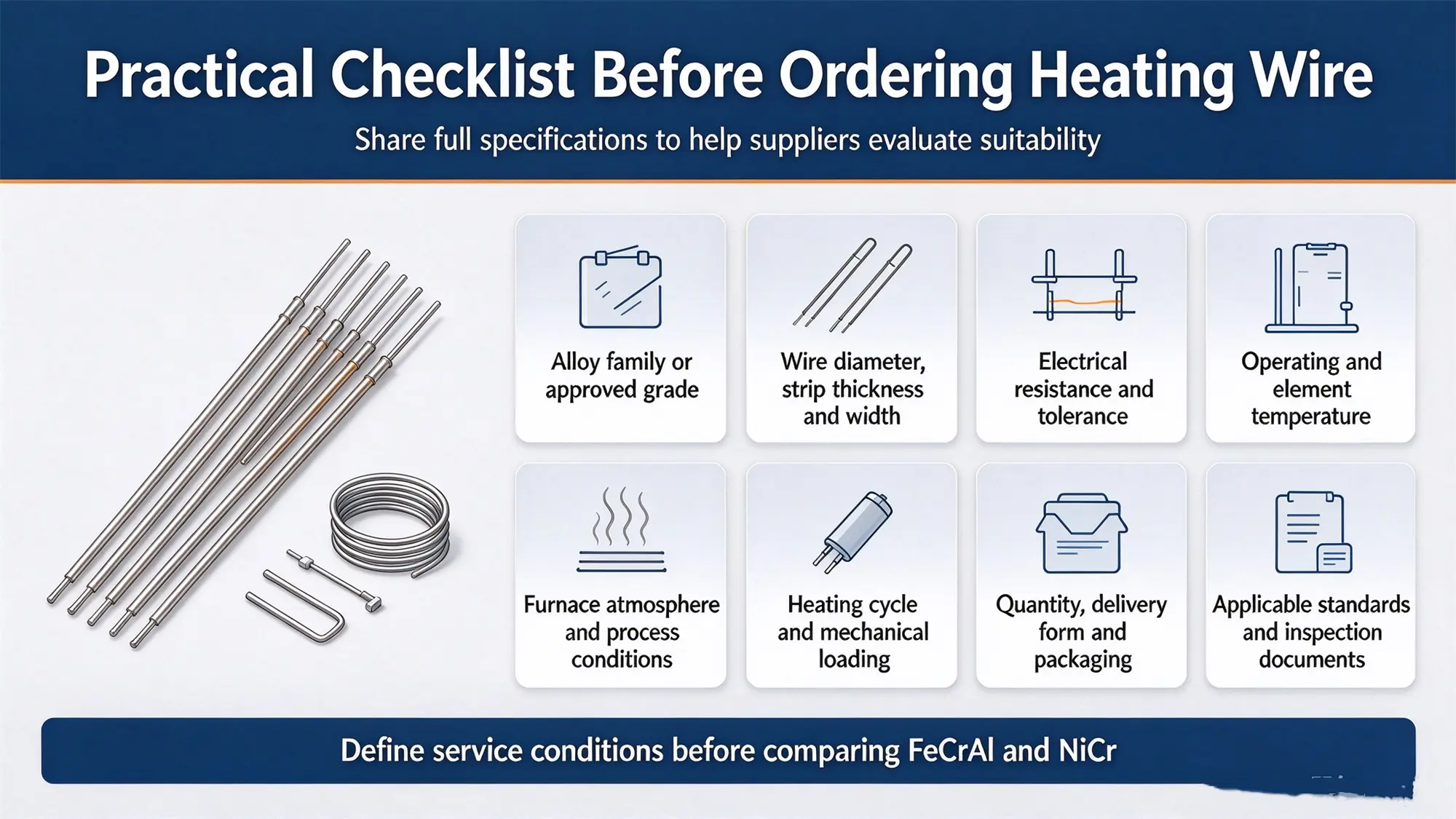
A Practical Checklist Before Ordering Heating Wire
Before requesting a quotation, prepare the following information:
- Required alloy family or approved grade
- Wire diameter, strip thickness and width, or other dimensions
- Required electrical resistance and tolerance
- Operating and element temperatures
- Furnace atmosphere and process conditions
- Heating cycle and expected mechanical loading
- Required delivery form, quantity and packaging
- Applicable standards and inspection documents
Providing these details early helps the supplier assess whether the requested material and dimensions are appropriate for the application.
How to Source FeCrAl or NiCr Heating Wire
For industrial buyers, the purchasing process should begin with a clear technical specification rather than a generic request for resistance wire.
Ask the supplier to identify the proposed grade, confirm dimensional and electrical requirements, and provide the relevant technical documentation. Where a material substitution is proposed, review the differences in composition, resistance characteristics and operating limitations before approval.
DZX Alloy supplies FeCrAl and NiCr resistance alloy products for industrial heating applications. Availability, dimensions, technical documentation and customization should be confirmed against the requirements of each order.
Frequently Asked Questions
Is FeCrAl always better than NiCr for high-temperature applications?
No. The appropriate choice depends on the exact alloy grade, operating atmosphere, element design, thermal cycling and service requirements. Compare documented grade-specific data before making a decision.
Can FeCrAl wire directly replace NiCr wire?
Not necessarily. The electrical resistance, dimensions, operating characteristics and element design may differ. A substitution should be reviewed by the responsible heating-system engineer.
What information should be included in a heating wire inquiry?
Include the intended application, grade if known, dimensions, electrical requirements, operating temperature, atmosphere, quantity and required documentation.
How can buyers verify the material supplied?
Request the applicable material certificate, grade identification and inspection records agreed for the order. Confirm that the documents correspond to the supplied material and specified requirements.
Discuss Your Heating Alloy Requirements
Choosing a resistance alloy is an engineering decision that should reflect the actual working environment, not just a material name or headline temperature.
If you are sourcing FeCrAl heating wire or NiCr resistance wire, share your dimensions, operating conditions and electrical requirements with DZX Alloy. Our team can review the specification and discuss suitable supply options for your application.