Case Overview
During performance testing after a power-plant unit overhaul, the instrumentation team found several main-steam and reheat-steam temperature points reading a few degrees Celsius below the reference instrument. The thermocouples passed laboratory testing and new cables had been installed. Investigation ultimately identified the compensation wire: during maintenance, a section had temporarily been replaced with ordinary copper-core shielded cable. Type K thermocouples require KX compensation wire. The extra thermoelectric voltage produced by copper between the junction-box temperature and the field temperature directly shifted the readings.
These problems often arise from compatibility across the “thermocouple + compensation wire + cold-junction treatment” chain. DZX supplies matched compensation wire and sheathed thermocouples by thermocouple type, with tolerance-class and insulation-resistance data. Field checks for polarity, cold junctions and shielding are included in the handover checklist to bring measurement deviations under control.
This case summarizes the application requirements, materials supplied by DZX and delivery value. For case-specific technical data, please contact our engineering team.
| Client Profile | Power-plant thermal instrumentation maintenance and service provider |
|---|---|
| Application | Main-steam and reheat-steam temperature points; auxiliary bearing temperatures; flue-gas and air/pulverized-fuel system measurement |
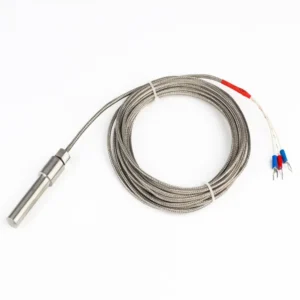
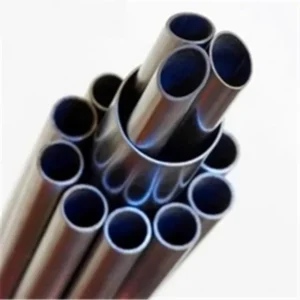
| Materials Supplied | Type K/N thermocouple wire, KX/NX compensation wire and sheathed thermocouples |
| Supply Forms | Coiled compensation wire, sheathed cable and alloy wire |
| Key Requirements | Wire matched to the thermocouple type; correct polarity; compliant insulation resistance and tolerance class |
| Delivery Arrangement | Standard sizes stocked; sheathed constructions and special protection tubes confirmed against the production schedule |
| Project Region | Northwest China |
Our Solution
- Type matching: select KX, NX or other matching compensation wire according to the thermocouple type; do not extend with ordinary copper cable. Mark polarity at the junction box to prevent reversed connections after maintenance.
- Cold junctions and shielding: place terminals in an isothermal zone where possible and ground the shield at one end. Check insulation resistance section by section on long runs to reduce drift from moisture and interference.
- Sheathed construction selection: grounded (G2) junctions offer fast response and good interference resistance for most routine points. Ungrounded (U2) junctions suit locations with ground loops or interference from multiple ground connections. Recommend bending radius and insertion depth for each operating condition.
- Acceptance support: supply thermocouple type, tolerance class and insulation-resistance data, together with pre- and post-calibration site records, to locate deviations within the measurement chain.

Type K / N, Class 1 tolerance

Matched KX / NX types

G2 / U2 constructions
Technical Specifications
Common compensation-wire and sheathed-thermocouple combinations:
| Wire Type | Matching Thermocouple | Temperature Resistance |
|---|---|---|
| KX (for Type K) | Thermoelectric characteristics matched to Type K thermocouples | Generally ≤400℃ (wire itself) |
| NX (for Type N) | Thermoelectric characteristics matched to Type N thermocouples | Generally ≤400℃ (wire itself) |
| JX / EX and others | Select for the corresponding thermocouple type | Confirm by model |
Common acceptance items (assessed against GB/T 16839.1-2018 and product specifications):
| Item | Requirement |
|---|---|
| Tolerance class | Class I / Class II (Type K Class I: ±1.5℃ or ±0.4%|t|, whichever is greater) |
| Insulation resistance | Sample inspection according to sheath and operating conditions; moisture-affected components require retesting |
| Measuring-junction construction | Grounded (G2) / ungrounded (U2), selected for operating conditions |
| Sheath and protection tube | Material, outside diameter and wall thickness to drawing; bending radius must meet installation requirements |
Delivery and Quality Support
- Supplied documentation: material certification and thermocouple type/tolerance-class data; batch insulation-resistance sampling records available.
- Site support: wiring polarity, cold-junction position and shield grounding can be checked individually during handover.
- Deviation traceability: investigate abnormal readings section by section in this order: thermocouple body—compensation wire—cold junction and terminals—instrument, to locate the cause quickly.
- Spare-parts recommendation: retain same-batch spares for critical measurement points to support comparisons and checks after replacement.
Customer Feedback
The instrumentation team focused on three practical issues: whether wire type and polarity were marked at delivery; whether sheathed assemblies could be installed immediately on arrival (bending radius and sheath dimensions); and whether deviations could quickly be identified as material or wiring problems. We incorporated these into supply and handover: marking type and polarity, confirming sheath and bend requirements to drawing, and recommending a sectional troubleshooting sequence to reduce repeated field disassembly.
Our Capabilities
Jiangsu DZX Technology Co., Ltd., based in Changzhou, operates a self-owned factory of 12000+ square meters with melting, wire drawing and finishing lines. Its core team has worked with precision alloys and thermocouple materials since 2002, serving 1500+ business customers. Products undergo incoming, in-process and final inspection under the ISO9001 system. Bring your measurement-point list to our engineering team for selection of thermocouple wire, compensation wire and sheathed assemblies.
Related Products
- Thermocouple Compensation Wire Product Page (KX/JX/EX specifications and parameters)
- Mineral-Insulated Thermocouple Cable (MI Cable) Product Page
- Thermocouple Alloys Overview
- Alloys for Energy Applications
- Further Reading: Matching Thermocouple Wire and Compensation Wire in Power-Plant Temperature Measurement
- Further Reading: Thermocouple Compensation Wire Selection Guide
Frequently Asked Questions
Can ordinary copper-core cable replace compensation wire?
What should be checked first when thermocouple readings are too low or too high?
How should G2 and U2 sheathed thermocouples be selected?
How are tolerance Classes I and II selected?
How are minimum order quantities, sampling lead times and acceptance arranged?
More Successful Cases
Qualification of Superheater Protection for Incinerators
Inconel 625 overlay welding and thermal-spray wire
Structural Materials for Precision Instruments
Invar36 strip and plate with measured CTE
4J29 Kovar Alloy for Glass Sealing in Vacuum Devices
Batch-measured expansion and wet-hydrogen annealing support
References
- IEC 60584-1:2013“Thermocouples — Part 1: EMF specifications and tolerances” Specifies reference functions and tolerances for letter-designated thermocouples (Type K Class I: ±1.5℃ or ±0.4%|t|, whichever is greater). View Source
- GB/T 16839.1-2018: Thermocouples—Part 1: EMF Specifications and Tolerances Adopts IEC 60584-1:2013 and specifies reference characteristics and tolerance classes; a principal basis for thermocouple incoming acceptance. View Source
- GB/T 4989-2013: Extension and Compensating Cables for Thermocouples Specifies compensation-wire classification, marking, tolerances, insulation, sheath and shielding requirements. View Source
- GB/T 4990-2010: Alloy Wires for Extension and Compensating Cables of Thermocouples Specifies grade, chemistry and thermoelectric requirements for KX, NX, EX and other compensation-wire alloys. View Source
- ASTM E230/E230M“Standard Specification for Temperature-Electromotive Force (emf) Tables for Standardized Thermocouples” EMF-temperature reference tables for thermocouple types, standard/special tolerances, and extension- and compensation-wire tolerances. View Source
- ASTM E235/E235M-23“Standard Specification for Type K and Type N Mineral-Insulated, Metal-Sheathed Thermocouples” Specifies sheath dimensional tolerances, grounded (G2)/ungrounded (U2) measuring-junction construction and insulation-resistance requirements for Type K/N sheathed thermocouples. View Source