Case Overview
A hydrogen-system integrator was scaling a PEM electrolyzer platform from a 50 kW prototype to volume production of 1 MW-class stacks. Component geometry tolerances acceptable during prototyping became yield problems at scale: porous transport layer (PTL) thickness exceeded the design window, bipolar-plate strip thickness drift caused uneven stack compression, and three separate material suppliers made incoming inspection and traceability management unsustainable.
DZX qualified and consolidated the metal bill of materials—titanium PTL mesh, 316L bipolar-plate strip and nickel foam—into one auditable supply with batch dimensional reports. The customer reduced three suppliers to one, and stack assembly yield improved within two production quarters.
This case summarizes the application requirements, materials supplied by DZX and delivery value. For case-specific technical data, please contact our engineering team.
| Item | Details |
|---|---|
| Client Profile | Hydrogen-system integrator (PEM electrolyzers and fuel cells) |
| Project Scale | 50 kW prototype → volume production of 1 MW-class stacks |
| Application | Porous transport layers, bipolar plates and current collectors |
| Materials Supplied | Titanium TA1/GR1, stainless steel 316L and nickel Ni201 |
| Supply Forms | Mesh, strip, foam and wire |
| Lead Time | Sample batches: 2 weeks; production batches: 4-6 weeks |
| Project Country | Netherlands |
| Project Year | 2025 |
Our Solution
Scale-up exposed three material problems that consumed yield and engineering time:
- PTL geometry control: 0.5 mm porous transport layers required ±0.03 mm to maintain uniform active-area contact resistance and gas transport; prototype-grade mesh varied by twice that amount.
- Bipolar-plate consistency: ±0.015 mm thickness drift in 0.1 mm strip caused uneven stack compression and sealing-surface leaks, lowering assembly yield.
- Fragmented suppliers: titanium, stainless steel and nickel came from three suppliers with different document formats, turning incoming inspection into a full-time job and complicating traceability audits.

DZX consolidated project metal supply around measurable specifications:
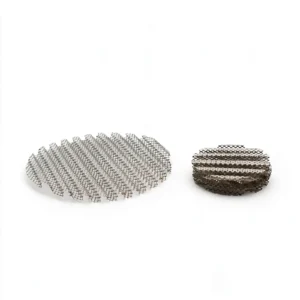
Titanium PTL mesh was supplied in TA1/GR1 with batch thickness and open-area verification to ASTM B265. 316L strip was rolled to 0.1 mm ±0.005 mm with documented surface condition for bipolar-plate stamping. Nickel foam and strip (Ni201) covered current collectors. Each batch included chemistry, dimensional and surface reports in one format. Sample batches arrived within two weeks, allowing the customer to freeze the stack design without waiting for production lead times.
| Material | Representative Grades | Key Properties | Available Forms |
|---|---|---|---|
| Titanium | TA1 / GR1 | Corrosion resistance and PTL performance | Mesh, strip and wire |
| Stainless steel | 316L | Conductivity and corrosion resistance | Strip (0.05-0.5 mm) |
| Nickel | Ni201 | Current collection | Foam, strip and wire |
View Titanium Alloys → | View Stainless Steel → | View Pure Nickel →

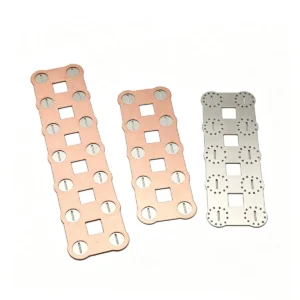
Porous transport layers and bipolar plates

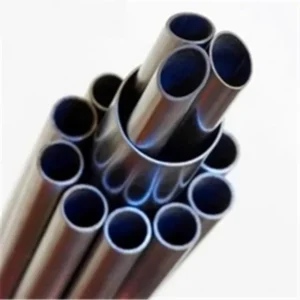
Structural components and piping

Electrodes and current collectors
Technical Specifications
Key technical parameters agreed before production. Contact us for grade-specific datasheets and tolerance-verification reports.
| Parameter | Agreed Specification | Verification Method |
|---|---|---|
| PTL thickness | 0.5 mm ± 0.03 mm | Micrometer, batch sampling plan |
| PTL open area / porosity | Open area to customer drawing | Sample image analysis |
| Bipolar-plate strip | 0.1 mm ± 0.005 mm | 100% width + sampled thickness |
| Strip surface condition | Ra ≤ 0.8 μm, oil-free | Profilometer + cleanliness inspection |
| Titanium chemistry | ASTM B265 (TA1/GR1) | Chemical analysis report |
Each supplied batch includes a quality inspection certificate with chemical analysis, meeting the applicable standard for each grade.
| Material | Applicable Standards |
|---|---|
| Titanium | ASTM B265 |
| Stainless steel | ASTM A240 |
| Nickel | ASTM B162 |
| Quality System | Quality inspection certificate including chemical analysis |
Delivery and Quality Support
- Fast delivery: Sample and production lead times follow the project schedule; standard grades and sizes can be dispatched promptly from stock.
- Quality traceability: Every batch includes material certificates and inspection reports, with full heat and batch traceability.
- Technical support: Responsive support covers pre-sale material selection, drawing review and post-sale processing advice.
- Ongoing service: Regular follow-up after delivery tracks performance and addresses feedback promptly.
Customer Feedback
- Three suppliers consolidated into one: titanium, stainless steel and nickel under one auditable quality system
- Improved stack yield: consistent plate thickness and controlled PTL geometry reduced assembly defects within two quarters
- Earlier design freeze: 2-week sample batches enabled design confirmation without waiting for production lead times
- Traceable batches: consistent chemistry, dimensional and surface reports for every batch
- Scalable supply: stable 4-6-week production lead times as the project expanded
- Oxidation-resistant selection: grades and surface conditions with low contact resistance selected for oxidizing electrolyzer environments
Our Capabilities
Jiangsu DZX Technology Co., Ltd. (Changzhou DLX Alloy) was founded in 2016. Its core team has worked in the field since 2002, with 24 years of precision-alloy R&D and production experience, operating a self-owned 12,000-square-meter modern factory with an ISO9001 system covering three inspection stages. Annual alloy output exceeds 1,200 tonnes, serving 1500+ business customers worldwide. The company operates integrated melting, drawing, annealing and precision-machining workshops, supporting volume customization of strip, wire, tube and bar. Every batch includes a chemical analysis report (MTC) for full delivery-quality traceability.
Related Products
New Energy Applications
Fuel-cell bipolar plates, PEM electrolyzers, battery materials and thermal management
Medical Applications
Implants, stents, electrodes, surgical instruments and MRI systems
Aerospace Applications
Engine hot sections, airframe structures, satellite mechanisms and rocket hardware
Energy Industry Applications
Boiler superheaters, nuclear steam generators and steam turbines