


DZX METAL PRODUCT CATEGORY
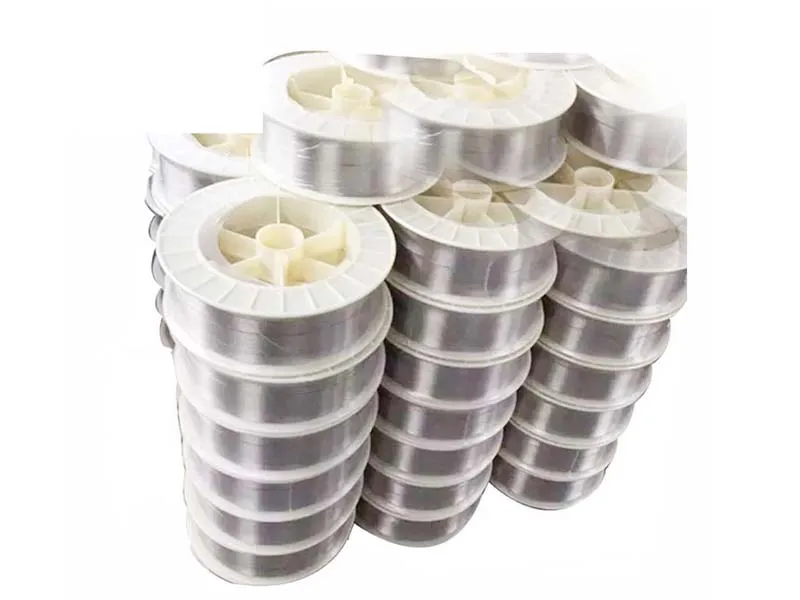
Thermal spray wire
Thermal spraying (thermal spraying) is a process that uses a heat source to heat the covering material to a molten state, atomize it into fine particles under the action of high-speed airflow, and spray it onto the surface of the workpiece at high speed to form a solid coating. This process can impart a variety of physical and chemical properties to parts, including extremely high hardness, wear resistance, corrosion resistance, high temperature resistance and oxidation resistance, electrical insulation or conductive properties, as well as microwave protection and sealing properties.
Available Grades and Products
Thermal spraying is a process where coating materials are heated and melted, then atomized into fine particles by high-speed airflow. These particles are then sprayed onto the surface of the workpiece at high velocity, forming a strong coating layer. This process imparts various physical and chemical properties to the workpiece, including enhanced hardness, wear resistance, corrosion resistance, heat resistance, oxidation resistance, insulation, electrical conductivity, sealing, sterilization, and microwave radiation protection.
Available grades: Pure Zinc, Inconel 625, Ni95Al5, Monel 400, Cr20Ni80, Monel K500, Hastelloy C-276, 45CT, Ni80Al20
Chemical Composition
| Nickel (Ni) | 95% |
| Aluminum (Al) | 5% |
Physical & Mechanical Properties
| Melting Point | 1400-1450°C |
| Density | 8.9 g/cm³ |
| Bond Strength | ≥ 55 MPa (Flame spray), ≥ 70 MPa (Electric arc spray) |
| Size | 1.2/1.6/2.0mm |
| Weight of Axle | 15kg |
Spraying Parameters (Electric Arc Spray)
| Parameter | Recommended Value |
| Spray Voltage | 30-40V |
| Spray Current | 100-300A |
| Air Pressure | 0.4-0.6MPa |
| Spray Distance | 100-150mm |
| Preheat Temperature | 80-150°C |
| Coating Thickness | 0.1-1.5mm |
- Corrosion protection: Zinc and aluminum coatings for bridges, ships, and pipelines
- Wear resistance: Molybdenum coatings for automotive parts such as pistons and gears
- Thermal barriers: Aluminum-based or nickel-based coatings for turbines and exhaust systems
- Repair & restoration: Steel and alloy coatings for repairing worn or damaged industrial parts
- Electrical conductivity: Copper and aluminum coatings for electronic and electrical contacts
- Versatility: Wide range of materials and substrates
- Durability: Enhances surface hardness, corrosion resistance, and heat resistance
- Cost efficiency: Extends the lifespan of expensive components
- Low heat input: Minimizes deformation of the base material
