CuNi resistance alloy

Copper-nickel alloy (Cu-Ni), often called white copper in China, is mainly composed of copper and nickel, and contains small amounts of iron and manganese. These alloys offer extremely high strength, excellent corrosion resistance, low resistivity, and good thermoelectric properties. They significantly reduce the temperature coefficient of resistance and have mechanical and physical properties superior to most other copper alloys. CuNi alloy has excellent ductility, high hardness, beautiful appearance, excellent corrosion resistance, and supports deep drawing processing, showing good performance at both normal and high temperatures. In addition, they offer excellent machinability, weldability, and are non-magnetic.

CuNi1

Jiangsu DZX Technology Co., Ltd. specializes in the production of CuNi1 (corresponding to the Russian standard МН1) copper-nickel alloy. Provide high-quality copper-nickel wire, rod, plate and strip with good corrosion resistance and resistance stability. Supports global shipping with complete specifications. Contact: Manager Jiang 19906119641.

Copper-Nickel Alloy

CuNi1

✓ ISO 9001 Quality
✓ COC & Test Certificates
✓ Established in 2002
✓ OEM & Custom Sizes
Specifications
  • Plate / Sheet Plate / Sheet
    Thickness: 0.2mm-100mm
    Width: 50mm-2000mm
    Size: Standard size (e.g. 1000mm×2000mm, 1200mm×2400mm), or customizable

  • Rod Rod
    Diameter: 2mm-250mm
    Length: 1m-6m, or customizable

  • Wire Wire
    Diameter: 0.01mm-8mm
    Delivery Forms: Bright shiny wire, annealed wire, etc.

  • Tube Tube
    Outer Diameter: 3mm-500mm
    Wall Thickness: 0.5mm-50mm
    Length: 1m-6m, or customizable

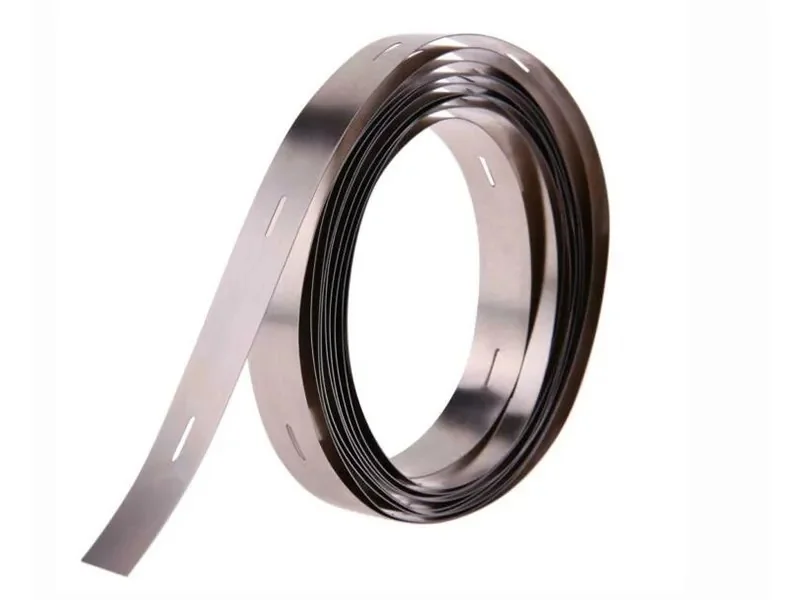
  • Strip Strip
    Thickness: 0.01mm-0.2mm
    Width: 5mm-300mm

Chemical Composition
  • Nickel (Ni): 1
  • Manganese (Mn): /
  • Copper (Cu): Rest
Physical & Mechanical Properties
  • Grade: NC003, CuNi1
  • Max. Service Temperature (°C): 200
  • Density (g/cm³): 8.9
  • Resistivity at 20℃ (μΩ•m): 0.03±10%
  • Resistance Temperature Coefficient ×10⁻⁶/ºC (20~600ºC): <100
  • Tensile Strength (Mpa): >210
  • Elongation at Rupture (%): >25
  • Melting Point (°C): 1085
  • Thermoelectric Potential of Copper (μV/℃) (0~100℃): -8
Supply Capability
ItemDetails
Lead TimeSamples 5-10 days; production 15-30 days
MOQSmall trial orders accepted
SamplesAvailable on request
PackagingExport-standard coil spools / wooden cases
CertificateCOC with chemical composition analysis
PaymentT/T, L/C
Project Support

Need this alloy for a demanding application?

Real-world qualification for the Marine & Offshore sector: tight tolerances, batch consistency and on-time delivery.

Discuss a Similar Project

Frequently Asked Questions (FAQ)

What is the composition of CuNi1? What is the resistivity level within the group?

CuNi1 contains 1.0% nickel and a balance of copper. The manganese column is marked with “/” which means no addition. The density is 8.9g/cm³. The resistivity standard at 20℃ is 0.03±10%, which is the lowest level in the whole group. The lowest resistance value means that the conductivity is the best in the group. It is suitable for situations where the design is designed in the direction of low resistance and partial conductivity.

CuNi1 contains 1.0% nickel and a balance of copper. The manganese column is marked with “/” which means no addition. The density is 8.9g/cm³. The resistivity standard at 20℃ is 0.03±10%, which is the lowest level in the whole group. The lowest resistance value means that the conductivity is the best in the group. It is suitable for situations where the design is designed in the direction of low resistance and partial conductivity.

CuNi1 contains 1.0% nickel and a balance of copper. The manganese column is marked with “/” which means no addition. The density is 8.9g/cm³. The resistivity standard at 20℃ is 0.03±10%, which is the lowest level in the whole group. The lowest resistance value means that the conductivity is the best in the group. It is suitable for situations where the design is designed in the direction of low resistance and partial conductivity.

This is the thermoelectric potential value when it is paired with copper in the range of 0~100℃. The negative sign indicates the direction of the electric potential. The absolute value of -8μV/℃ is the lowest in the whole group, which means that CuNi1 basically does not rely on thermoelectric potential characteristics. It can be used as a low-resistance copper-nickel conductor material. Don’t expect it to produce thermoelectric output.

Plate thickness 0.2-100mm, rod diameter 2-250mm, wire 0.01-8mm (bright surface or annealed), pipe outer diameter 3-500mm, wall thickness 0.5-50mm, strip thickness 0.01-0.2mm, all can be customized and supplied according to standard sizes or drawings.

Contact our specialist now!
Material advice, custom specifications and project support.
Scroll to Top
Send Your Inquriy Today
Download Technical Documentation
Please fill out the form below to receive product brochures, specifications, and technical details.